Colony artwork
August, 2022 Kelp Store, Papa Westray, Orkney Dr Milo Newman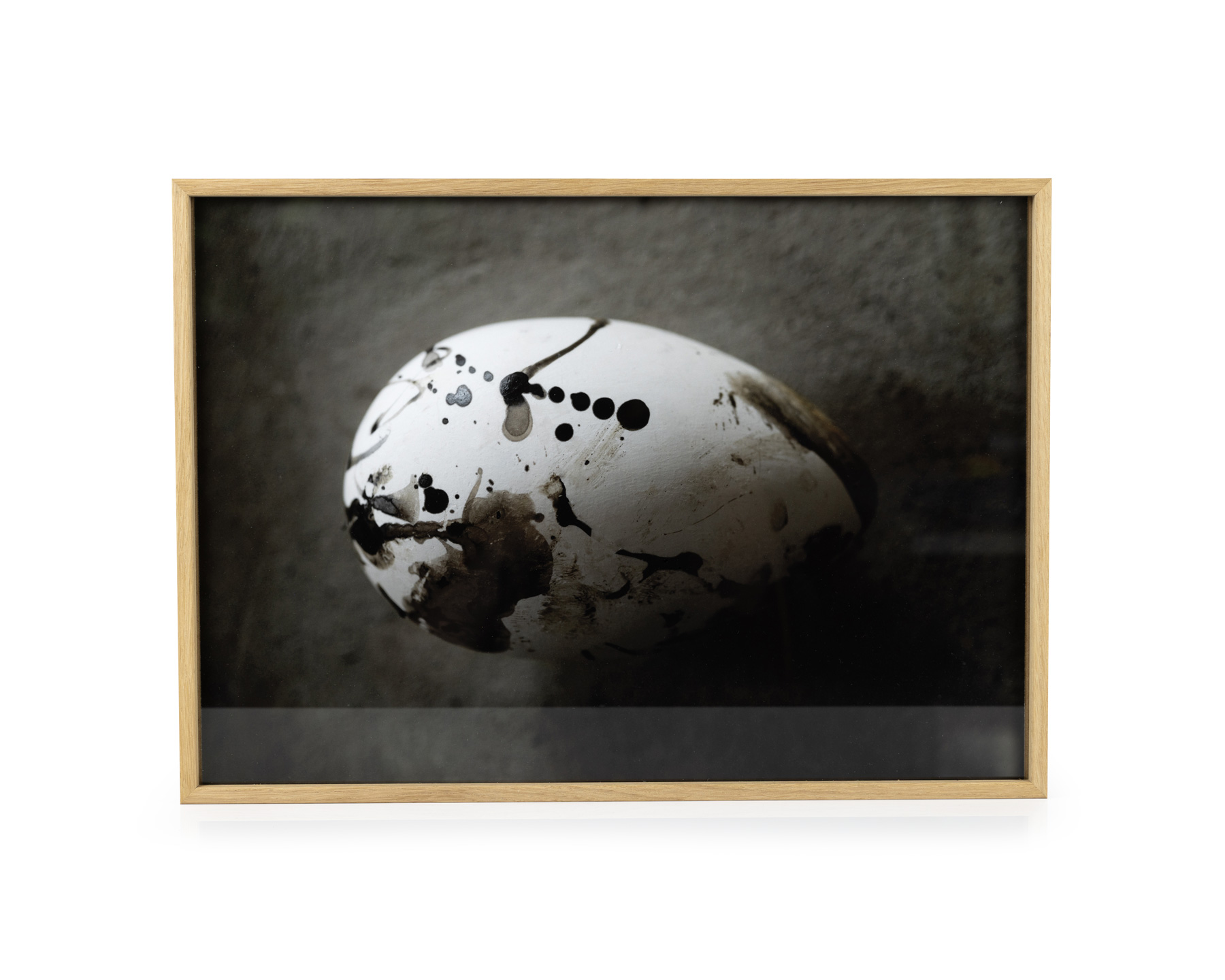
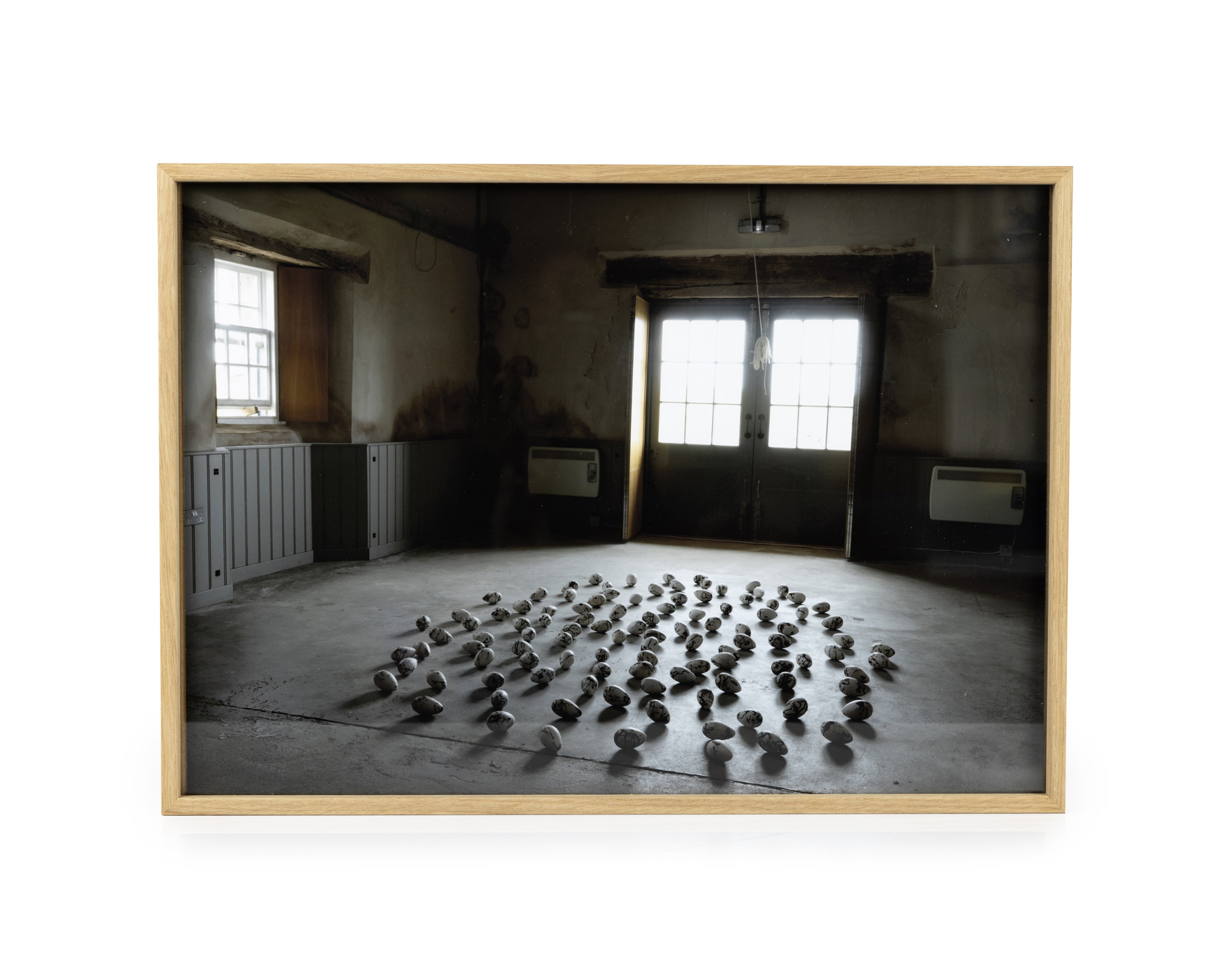
Jesmonite resin, photographic emulsion. The framed photographs depict an artwork, Colony. Produced and exhibited on the island of Papa Westray in Orkney, this installation responds to the local extinction of the great auk. Though not the last of these birds in existence, a pair of great auks was killed here in 1812 and 1813. Known locally as the “King and Queen of the Aaks”, they were the last to be seen in Orkney, with only a few later accounts marking the species’ continued existence elsewhere around the North Atlantic. The male bird was killed on behalf of the collector William Bullock, who desired a specimen of the bird for his museum. The taxidermy mount is now held in the Natural History Museum.
The eggs were each marked with light sensitive photographic emulsion, mimicking the patterns found on real auk eggs. They were exposed on the island in specially made pinhole cameras for a duration of 42 days, an estimation of the birds’ old incubation period, and at a time that coincides with when they once came ashore to breed. The artwork sought to reconnect more-than-human heritages severed by processes of museological extraction, returning an aspect of its lost materiality to place and revealing the significance of creative acts of repatriation in telling critical stories about extinction process.
As a teaching resource they offer a chance to discuss the geographies of extinction, and of the potential of creative geographies.