Time punch clock
Early 1900s Cincinnati, America Professor Julie MacLeavy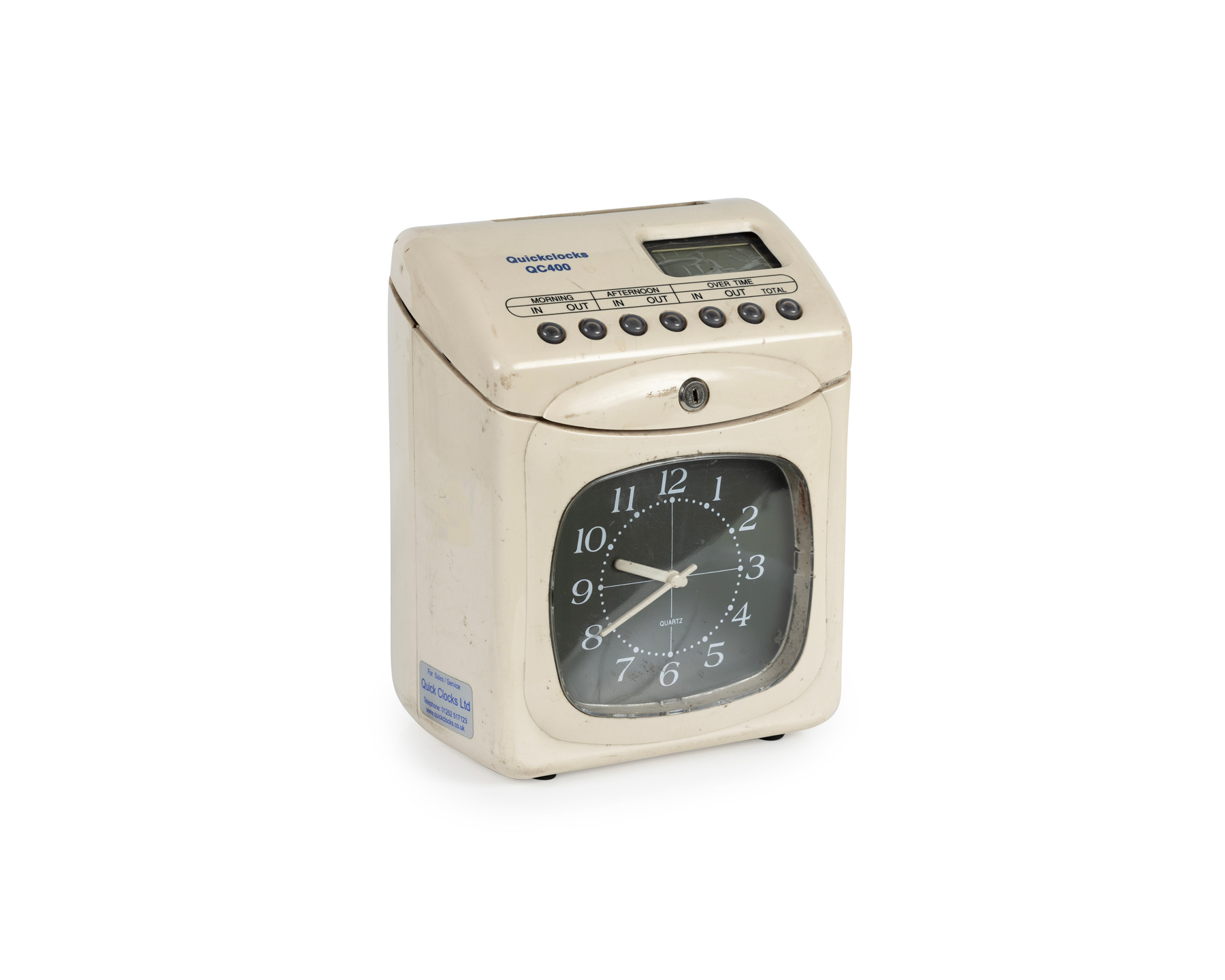
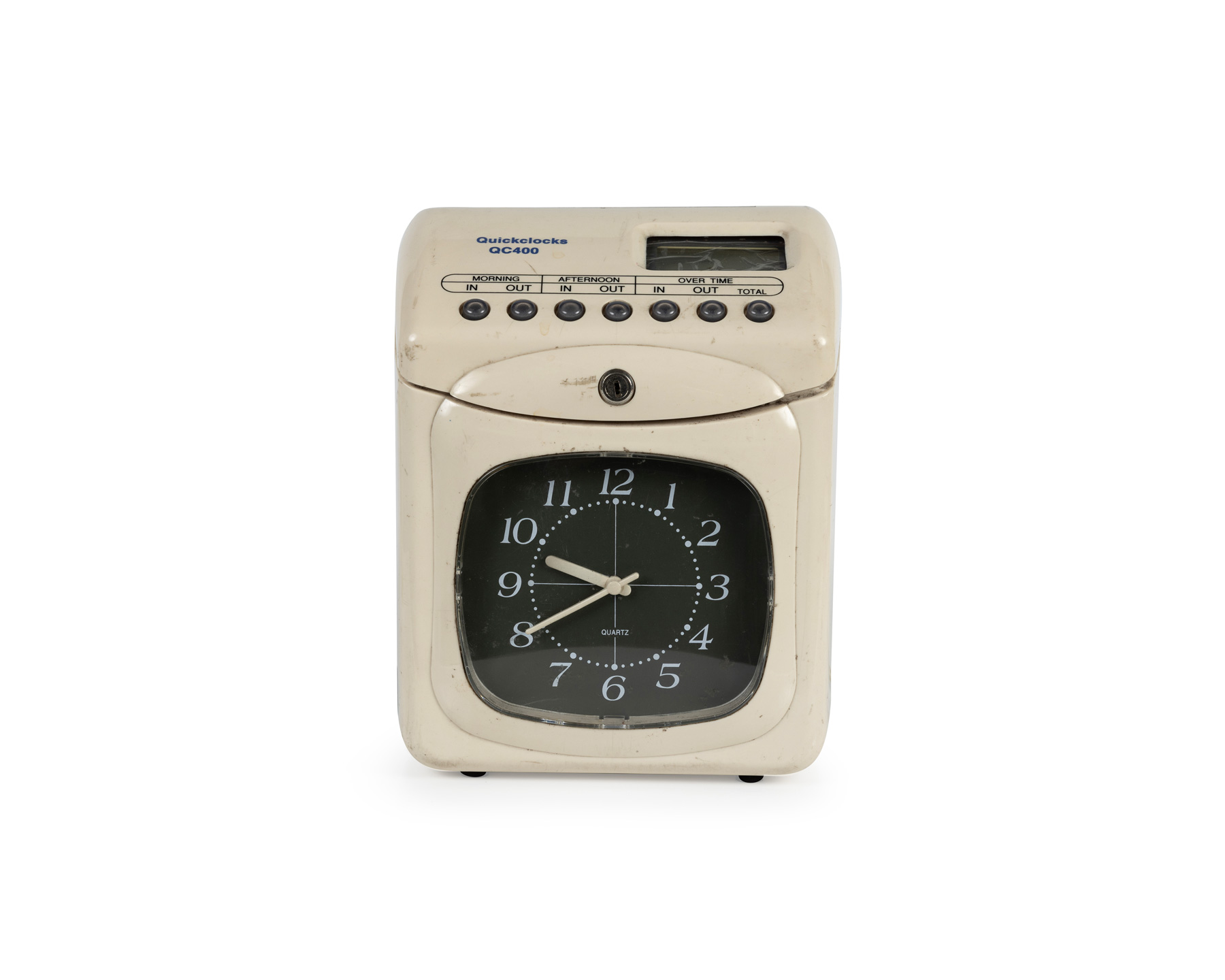
Bakelite (a thermosetting plastic), brass or other metals for internal components and paper for the time cards. The punch clock shaped the organisation of labour during the industrial era by allowing for the precise measurement of attendance. It contributed to the development of time-based labour markets, where workers are paid by the hour, rather than for their output, thereby creating a clear demarcation between work and non-work time. The requirement for employees to punch ‘in’ or ‘out’ on the clock also dictated the physical layout of many workplaces, by centralising employee entry and exit points. In the Year 2 Geographies of Work and Employment Unit, the punch clock is introduced as a powerful symbol of the industrial era and we reflect upon its legacy. While it may no longer be as central to the organisation of labour as it once was, the punch clock serves as a lens through which we can consider the evolving nature of work and its impact on society.